Investing in the Audemars Piguet Royal Oak
Few watches have shaped modern collecting like the Audemars Piguet Royal Oak. More than fifty years after its launch it still sits near the top of almost every serious collector’s list — and understanding why is the best preparation for buying one well.
The watch that broke the rules
The Royal Oak arrived in 1972, designed by Gérald Genta, as a luxury watch made of stainless steel — an idea that seemed almost absurd at the time. It was priced like a gold watch despite its humble metal, and the industry expected it to fail. Instead it created an entirely new category: the luxury sports watch, and the template that countless others have chased ever since.
Design that still defines the genre
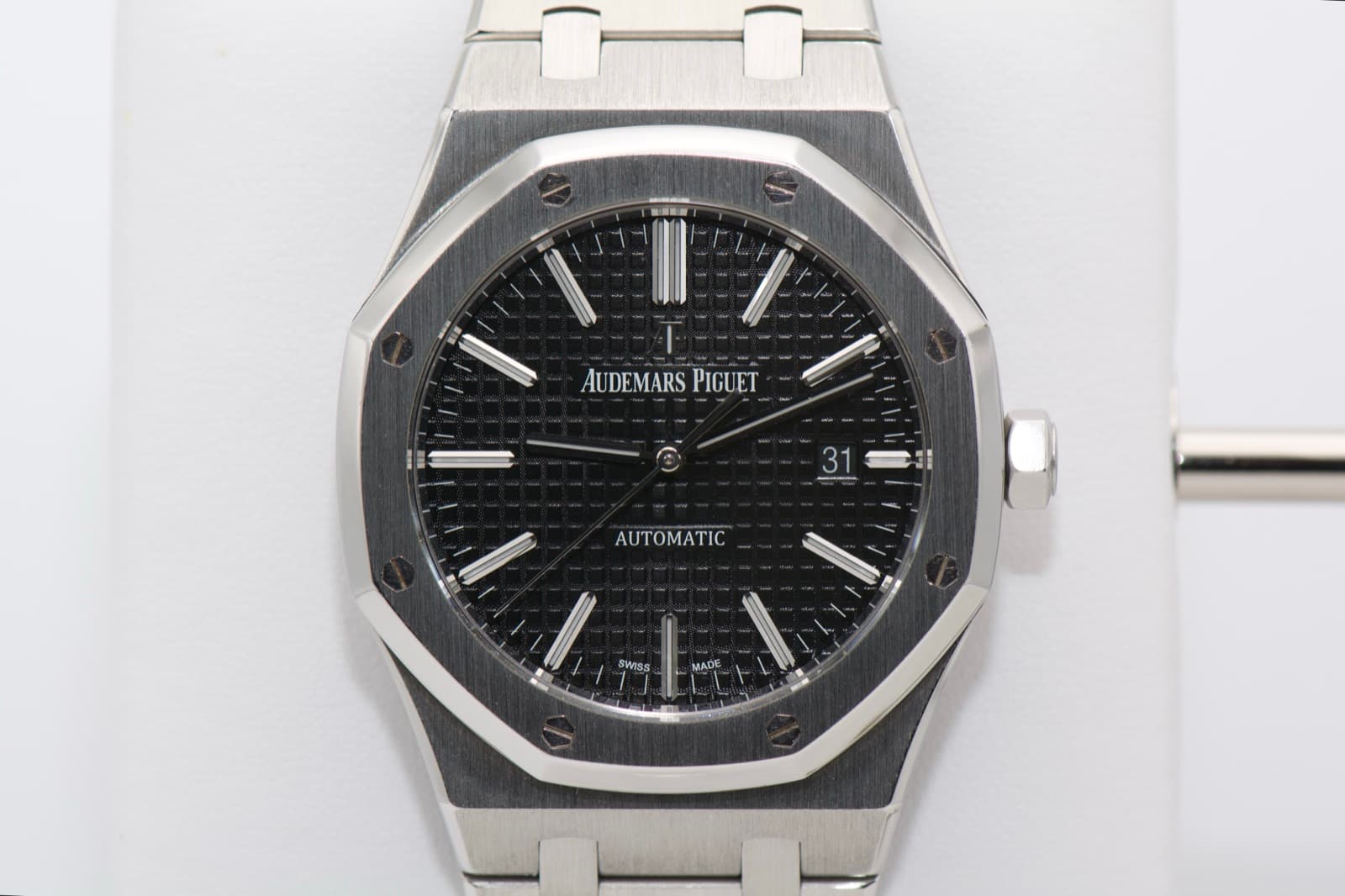
The appeal is in the details. The octagonal bezel, secured by eight hexagonal screws, is unmistakable across a room. The bracelet flows seamlessly out of the case in a way that still feels modern. And the “Tapisserie” dial — a finely-machined grid texture — catches light like nothing else, shifting as your wrist moves. It’s a watch that rewards close attention and looks like nothing produced before it.
The references that matter
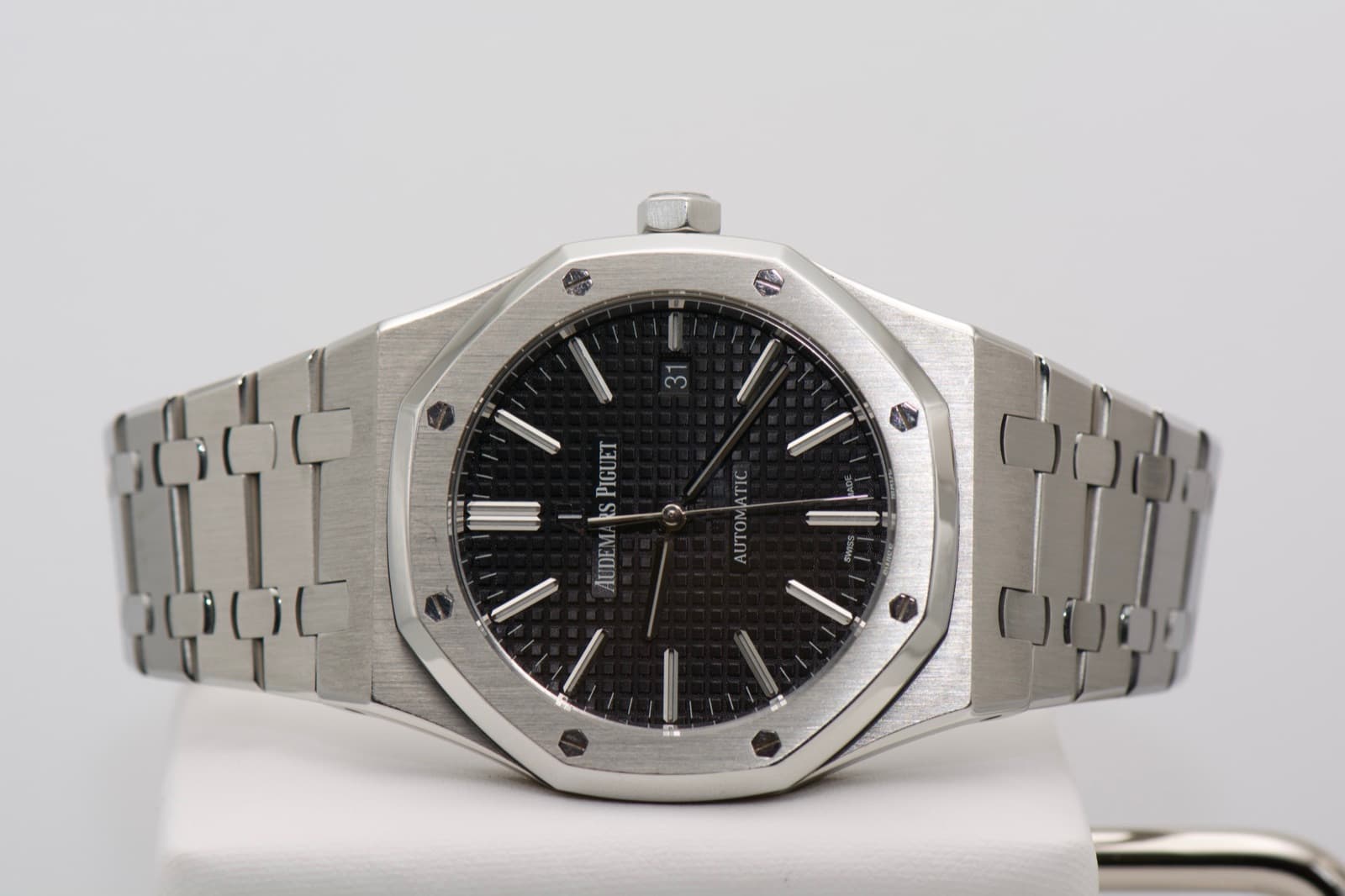
For most buyers the modern time-only Royal Oak in 41mm — the 15400 and its successor the 15500 — has become the natural reference point: a versatile, everyday size with the full design language intact. Collectors chasing the original spirit gravitate to the ultra-thin 39mm “Jumbo,” the 15202 (and today’s 16202), which traces its proportions directly back to the 1972 original. Smaller 37mm and earlier 39mm models like the 15300 carry their own dedicated followings. Each wears and trades differently, so handle a few before you commit.
What drives value
As with any sought-after watch, condition and originality are everything. Unpolished cases with their sharp brushed-and-polished contrast, crisp bevels and original dials command real premiums — the Royal Oak’s finishing is central to its appeal, and a clumsy polish erases it. Dial colour matters too; certain blues and rarer dials trade well above the standard. And provenance — extracts from the archives, certificates, service records, a complete set — adds genuine confidence and value.
Is it really an investment?
We’d caution against buying any watch purely as a financial play. Prices move in both directions, and the “investment” framing tends to lead people toward the wrong watch for the wrong reasons. But few pieces combine design significance, build quality and durable demand quite like the Royal Oak — and that combination is a sound reason to own one, with the resilience of its value as a welcome bonus rather than the point.
If you’re weighing a particular reference, we’re happy to talk it through honestly — what’s fair to pay, what to look for, and what to walk away from. And if you’d like us to source a clean example, that’s exactly the kind of hunt we enjoy.